

In the ever-evolving world of science and technology, new concepts frequently emerge that challenge our understanding of the universe. One such fascinating concept is Transphotonen. While it may sound complex at first, breaking it down into its fundamental elements makes it much easier to grasp. This guide is designed to help beginners understand the key concepts surrounding Transphotonen, their significance, and how they are studied in modern science.
What Are Transphotonen?
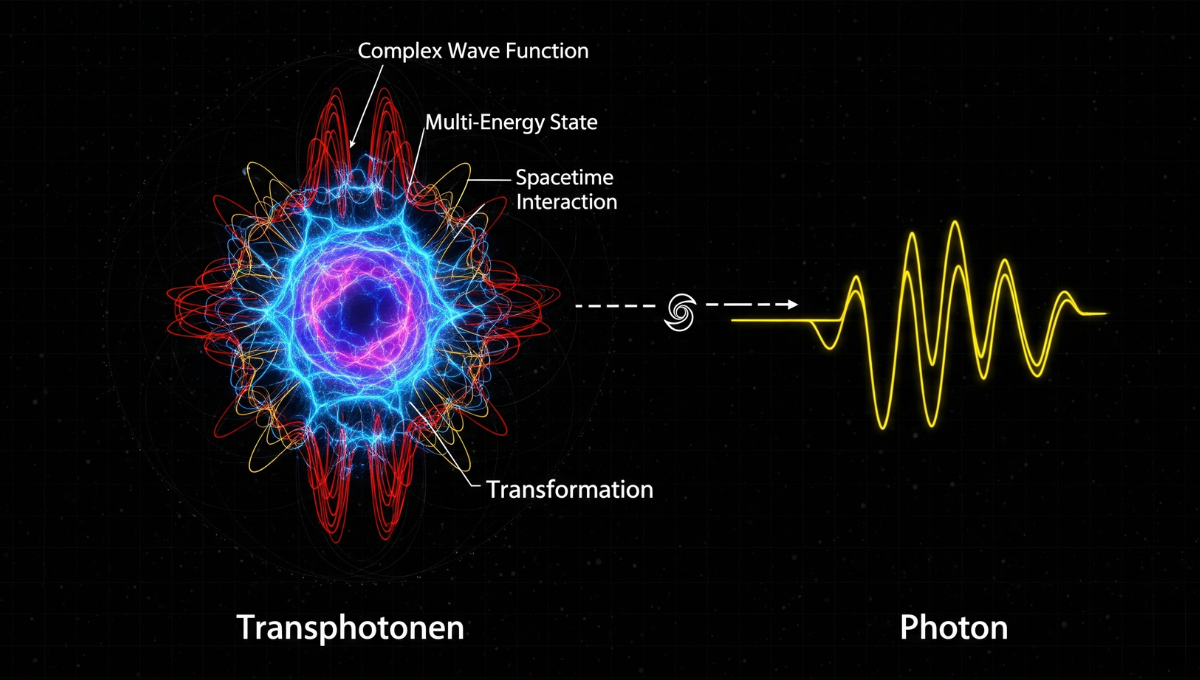
At its core, the term Transphotonen refers to a theoretical type of particle related to photons—the basic units of light. Unlike traditional photons, which are massless particles responsible for electromagnetic radiation, Transphotonen are hypothesized to exhibit unique properties that differentiate them from conventional light particles.
Some of the core characteristics include:
-
Energy Transfer Capabilities: Transphotonen may possess enhanced energy transfer potential, meaning they could interact with matter in ways ordinary photons do not.
-
Quantum Behavior: Similar to photons, they are governed by quantum mechanics but could exist in states that allow novel applications in quantum computing and communications.
-
Theoretical Existence: Currently, Transphotonen are primarily a concept in theoretical physics, explored through simulations and advanced mathematical models.
How Do Transphotonen Differ from Photons?
Understanding the distinction between photons and Transphotonen is key for beginners. While both are related to electromagnetic phenomena, the differences lie in:
-
Mass and Interaction: Traditional photons are massless and interact with matter only through electromagnetic forces. Transphotonen are theorized to have unique interaction patterns, potentially influencing materials in unprecedented ways.
-
Quantum States: Photons are well-studied in quantum mechanics, particularly in phenomena like superposition and entanglement. Transphotonen could introduce new quantum states or modes of entanglement.
-
Potential Applications: While photons are widely used in communication, lasers, and imaging, Transphotonen may open doors to advanced energy systems, secure quantum networks, or even novel forms of computing.
Why Are Transphotonen Important?
Although still largely theoretical, studying Transphotonen is crucial for multiple reasons:
-
Advancing Quantum Science: Understanding these particles can provide insights into uncharted areas of quantum mechanics and light-matter interaction.
-
Innovative Technologies: If proven to exist, Transphotonen could revolutionize fields like telecommunications, medical imaging, and energy transmission.
-
Expanding Physics Horizons: Research into Transphotonen pushes the boundaries of known physics, encouraging new experiments, technologies, and scientific thinking.
Key Concepts to Understand Transphotonen
For beginners, grasping a few foundational concepts can make learning about Transphotonen easier:
-
Photon Basics: Before diving into Transphotonen, it’s essential to understand traditional photons—their speed, energy, and electromagnetic nature.
-
Quantum Mechanics: Familiarity with superposition, entanglement, and particle-wave duality is helpful, as these principles often apply to theoretical Transphotonen research.
-
Theoretical Physics Models: Many studies on Transphotonen rely on advanced simulations or abstract mathematical frameworks rather than direct experiments.
-
Light-Matter Interaction: Understanding how light interacts with materials lays the groundwork for imagining how Transphotonen could behave differently.
Potential Applications of Transphotonen
While the research is still in early stages, scientists envision several potential applications:
-
Quantum Computing: Transphotonen could serve as qubits, enhancing computation power beyond current limitations.
-
Energy Transmission: Hypothetically, their unique properties might allow more efficient transfer of energy across distances.
-
Secure Communication: Utilizing unique quantum states could create unhackable communication channels.
-
Medical Technology: Enhanced imaging techniques using Transphotonen could revolutionize diagnostics and treatment methods.
Challenges and the Future of Transphotonen Research
Research into Transphotonen faces several hurdles:
-
Experimental Limitations: Due to their theoretical nature, directly observing Transphotonen remains extremely challenging.
-
Complex Mathematics: Understanding their properties often requires advanced mathematical frameworks, which can be a barrier for beginners.
-
Technological Constraints: Creating devices capable of interacting with or detecting Transphotonen is still a long-term goal.
Despite these challenges, the future of Transphotonen research is promising. Collaborative efforts between physicists, engineers, and computer scientists may soon turn theory into tangible discoveries.
Conclusion
Transphotonen represent one of the most intriguing frontiers in modern physics. While still largely theoretical, understanding their potential and the concepts behind them can inspire innovation and curiosity. For beginners, starting with the basics—photons, quantum mechanics, and light-matter interactions—provides a solid foundation. As research progresses, Transphotonen might move from theory to reality, potentially transforming technology and expanding our comprehension of the universe.
Exploring Transphotonen is more than a study of particles; it’s a journey into the possibilities of the unseen and a glimpse into the next era of scientific discovery.
